
“Have these been run?”
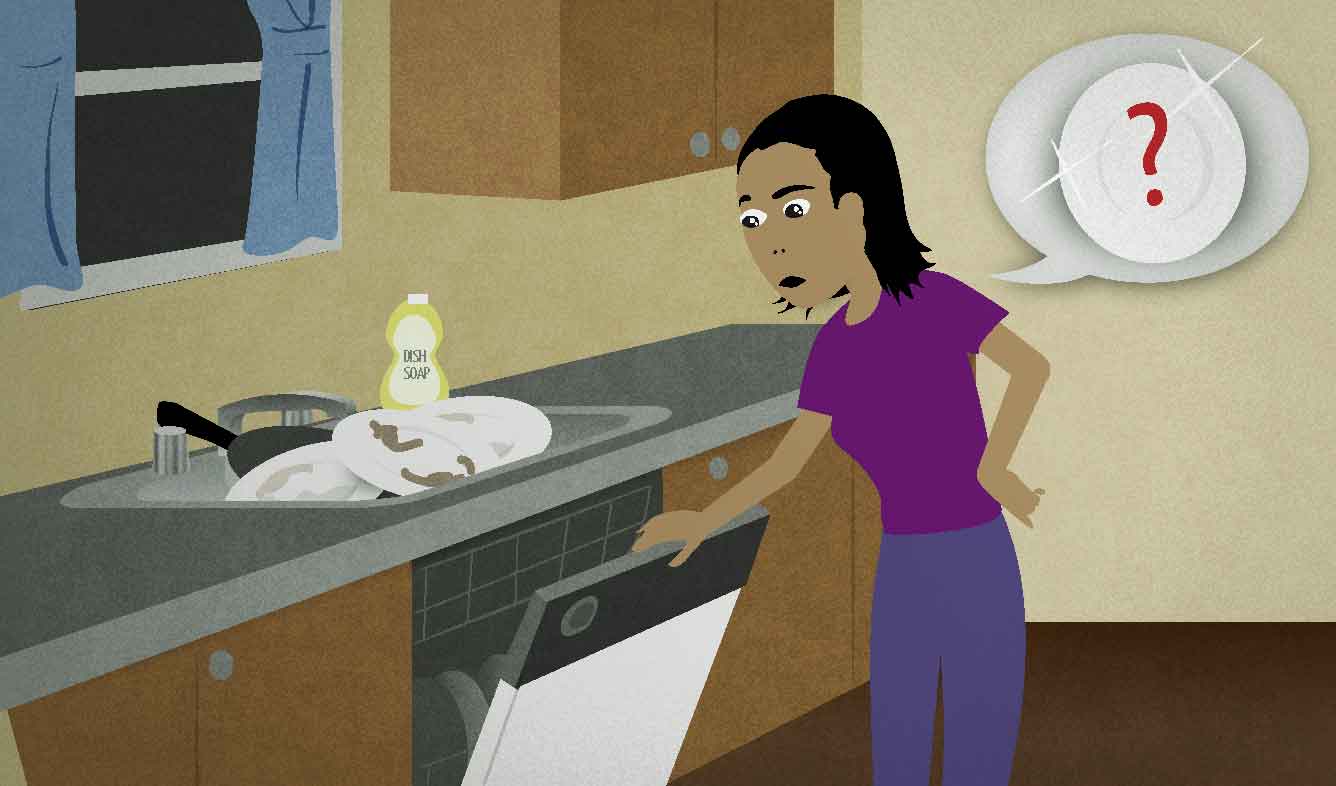
You open the dishwasher and you can't tell if the dishes are clean or dirty. You ask your husband this question.
Have these been run?
Want Video and Sound? Follow us on YouTube

run (a machine)
When you use a dishwasher to clean dishes, you say that you "ran" the dishwasher. For example:
A: Are the dishes in the dishwasher clean?
B: Yeah, I ran it this morning.
Some other machines that you "run" include:
Run the washing machine
Run the coffee maker
Usually the machines that you "run" should have a process with a clear starting and ending point like the ones above. But some people also use "run" for other machines that don't have a clearly defined process, like:
Run the vacuum
Run the fan
People also "run" computer programs. You can think of this as having a similar meaning to "running" a dishwasher: you start the program, and then it does some work and stops when it's finished.
Sometimes you can also use "run" to talk about the thing that a machine processes:
The towels smelled bad, so I ran them a few times.
(something) has been (done)
This kind of sentence is called a "passive" sentence. You use "have been ___ed" when you don't want to say who did something because you're trying to hide it, or just because it's not important.
If someone asks about the dishes in the dishwasher:
Have these been run?
...the speaker asks "Have these been run" instead of "Did you run these?" because it's not important who ran the dishes. It could be any member of the family.
In the example:
Yes, I just wanted to verify that my payment has been received?
...the speaker doesn't know exactly who receives the payments. All that's important is that the correct person or department received it.
these (dishes)
The example sentence above says "Have these been run?" The word "these" is talking about the dishes, which are countable.