
“Do not use if seal is broken.”
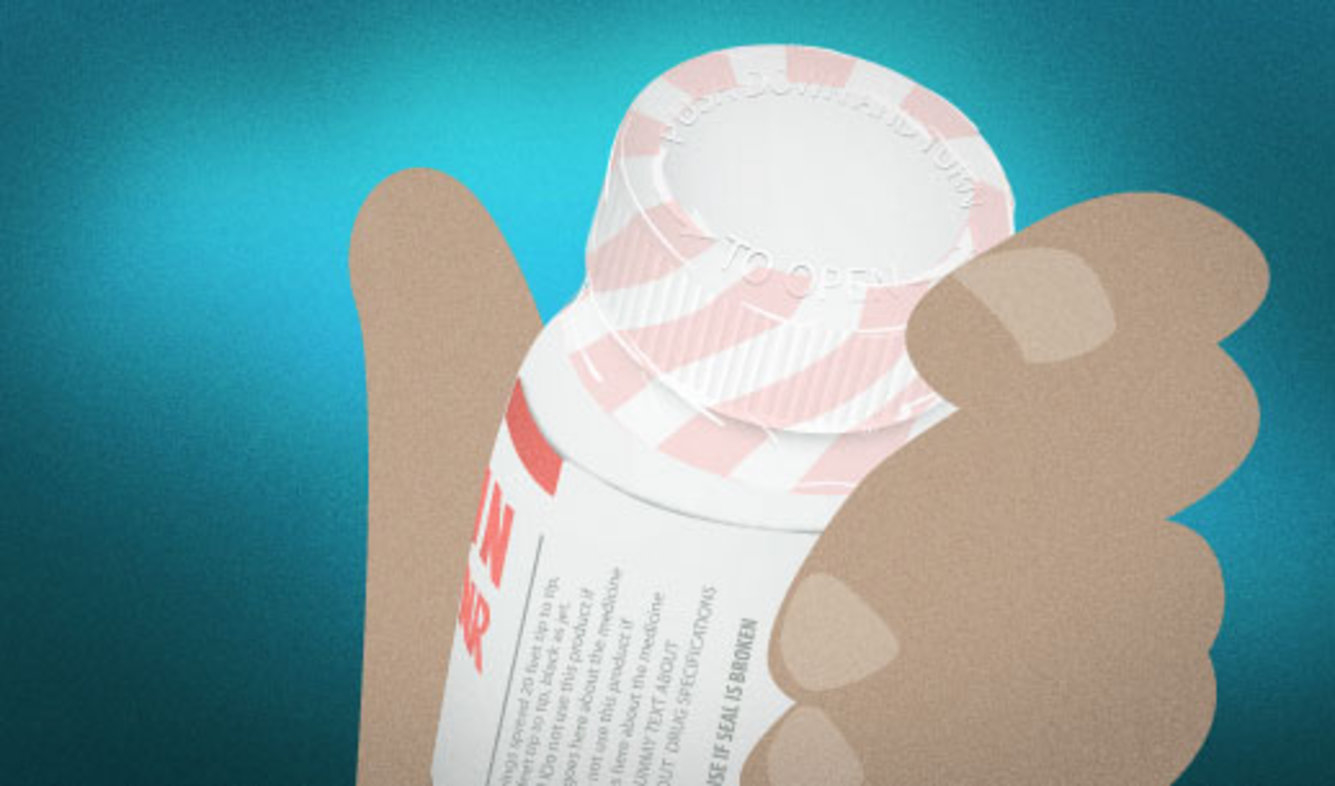
You're looking at a bottle of pain medicine in a drug store. It has plastic wrapped around the cap. You read this in the instructions on the side of the bottle.
Do not use if seal is broken.
Want Video and Sound? Follow us on YouTube

Do not use.
The word "use" usually needs to have something after it:
Do not use this medicine if the seal is broken.
But in written notices, people often leave out certain words that aren't necessary. Here are some examples of similar notices:
Beware of dog
Do not close
Please flush
Falling rocks ahead
Notices like these leave out objects ("this medicine"), "be" verbs ("are", "is", etc.) and articles ("the", "a").
break a seal
A "seal" is something that keeps something closed. There's actually a wide range of things that can be called "seals":
- When you install something like a window into a new home, you have to use a substance to seal the area around the window.
- If you go diving in the ocean, there's a seal around the area of your mask where it touches your skin and doesn't allow any water to get in.
- In the Middle Ages, kings used to use wax to seal their letters.
- There are seals on lots of products. The seals show when someone has opened the product.
"Breaking a seal" means opening up something that was closed and sealed. So, for example, if you open a sealed letter, you've "broken the seal".
There's also a funny meaning to "breaking the seal". You can read about it onUrban Dictionary.