
“This one is relatively inexpensive.”
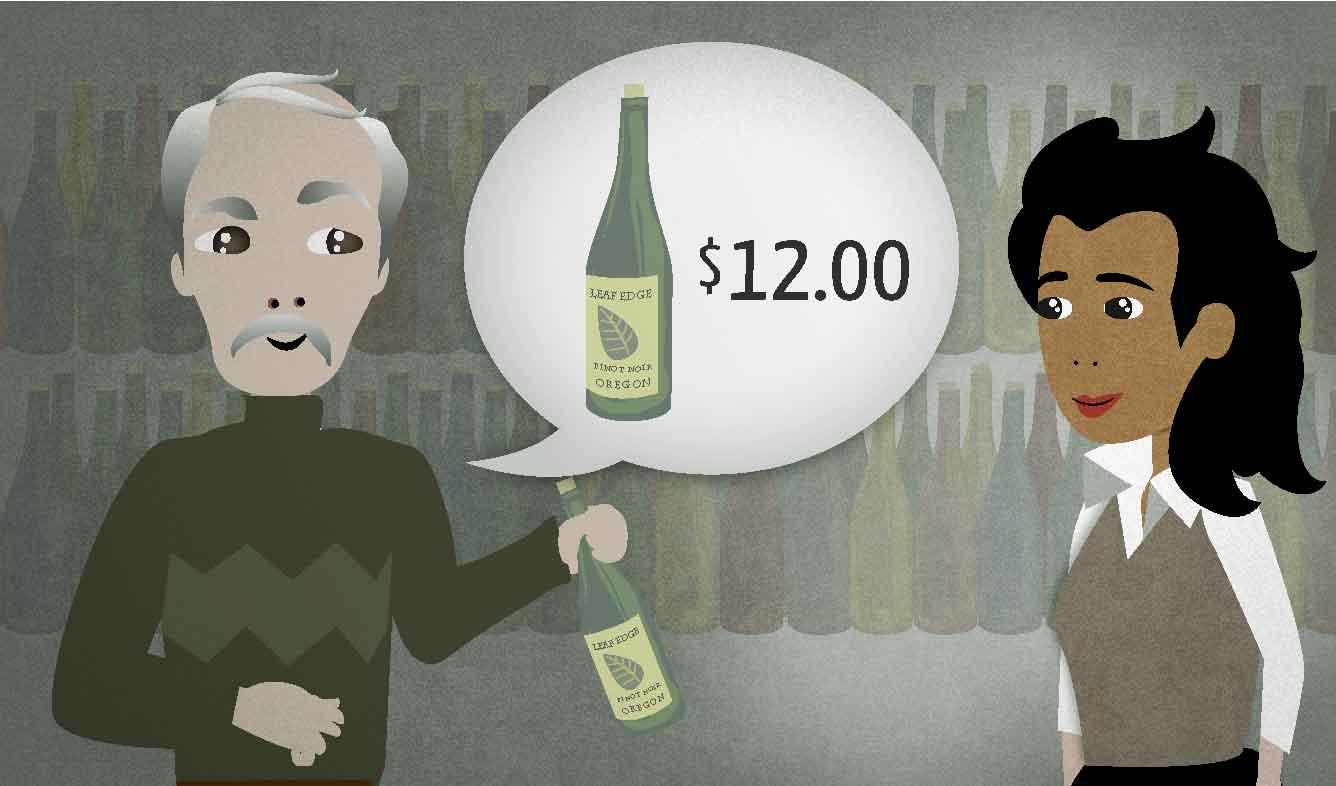
You're shopping for wine at a wine store. You want a wine that's good but not too expensive. The store employee makes this recommendation.
This one is relatively inexpensive.
Want Video and Sound? Follow us on YouTube

relatively (adjective)
Use this expression when you want to compare something to other things of the same kind.
For example, if you say that a wine is "relatively inexpensive", it means that it's cheaper than a lot of other wines that are of similar quality. The price might still seem expensive to the customer, but it is "relatively" cheap compared to those other wines.
The way that people use "relatively ___" is similar to "pretty ___" or "rather ___". It means an amount which is larger than "a little ___" but less than "very ___". So here are some examples:
- Most movies are about 90-100 minutes long. So a move that is 85 minutes long is "relatively short".
- The average height for men in the U.S. is 5 feet, 9 inches. Very tall people are sometimes 6 feet, 5 inches. So a 6-foot-tall man is "relatively tall".
Some adjectives which often appear after "relatively" are:
relatively small (number, percentage, budget)
relatively low (cost, chances, prices)
relatively easy (to do something)
relatively short (distance, time)
relatively simple
(something) is inexpensive
"Inexpensive" means "not expensive" or "cheap".
The word "cheap" can have a slightly negative connotation. You call things that are low quality "cheap":
But "inexpensive" doesn't have the same negative sound, so it's good to use if you work at a store and want to tell customers about a cheap item.
The letters "in-" are used at the beginning of several words to mean "not ___". In this example, "inexpensive" means "not expensive". Here are some other examples:
- incapable - not capable of doing something (not able to do it)
- inoffensive - not offensive (not making people shocked and angry)
- inconsiderate - not considerate of other people (not thinking about other people's feelings)
- inconsequential - not consequential (not important)
this one
Use "this one" to talk about something that's close to you right now, or very recently. For example:
A: Which one do you like?
B: I like this one.
Have you seen this one? (Pointing at a video on your computer)
Why do you need "one" with it? "This" and "that" can also be used by themselves:
I like this.
People use "one" when they're choosing one thing out of a group. It's like you're saying "this one, not the others".