
“Can you wipe that up, please?”
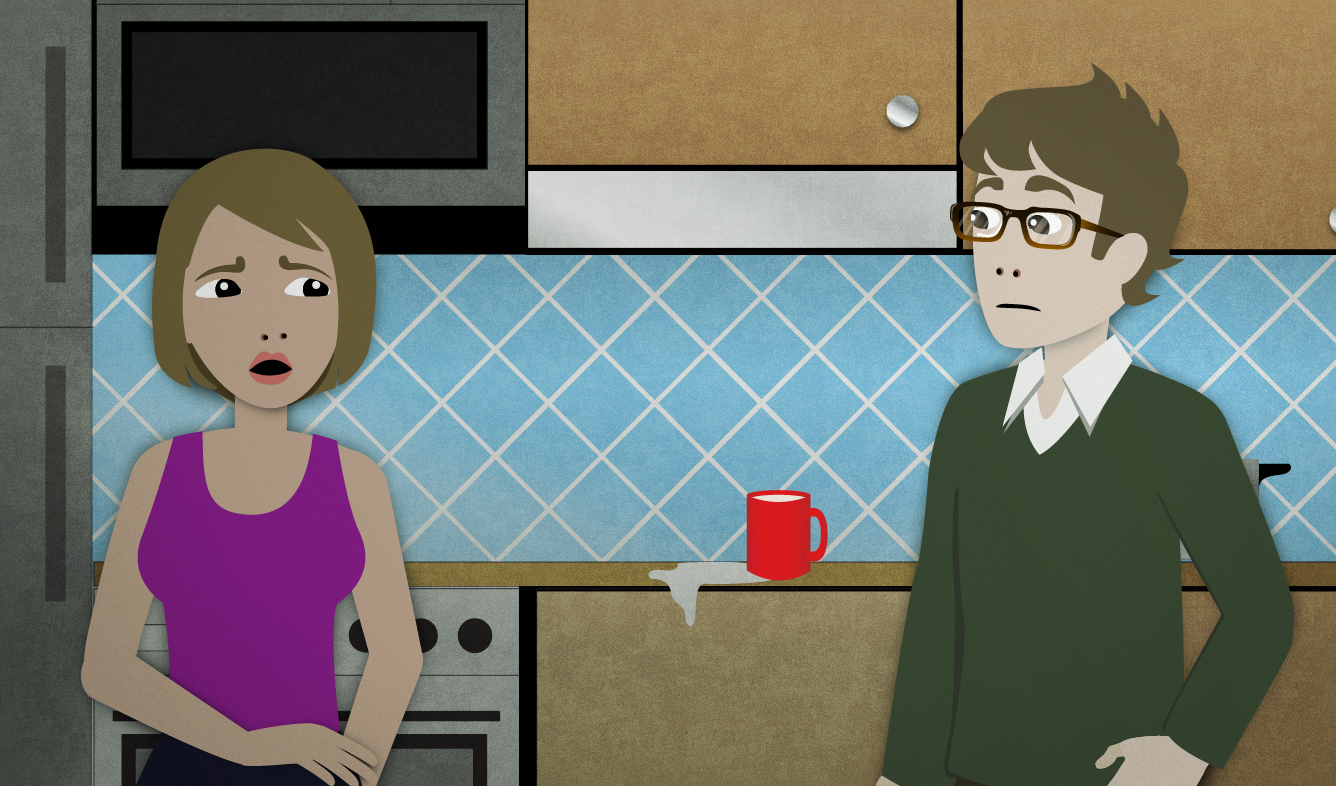
Your husband spilled some milk on the kitchen counter. It doesn't seem like he's going to clean it. You're annoyed, so you say this.
Can you wipe that up, please?
Want Video and Sound? Follow us on YouTube

Can you (do something) please?
This is way of asking someone to do something in an angry or frustrated way.
Adding "please" to a request doesn't always make it more polite. In many situations, asking without "please" sounds more polite. People often use "please" after a request when they're annoyed.
wipe (something) up
You "wipe up" a liquid by using a towel or paper towel to get rid of it. When you name the thing you're wiping up, you say it after "up":
Can you wipe up that milk on the counter?
When you use "it", "that", "this", or some short noun, you put it before "up":
Can you wipe it up?
Can you wipe the milk up?
Compare "wipe up" to "wipe ___ off (of something)". You use "wipe off" for something that's stuck onto something, like dust, grease, or some kind of mark:
Let me wipe the dust off of that before you use it.
And "wipe" can also be used in the phrase "wipe ___ down", which means to wipe something all over in order to clean it:
Don't forget to wipe down the counters and the top of the refrigerator.